 India

Quick answer
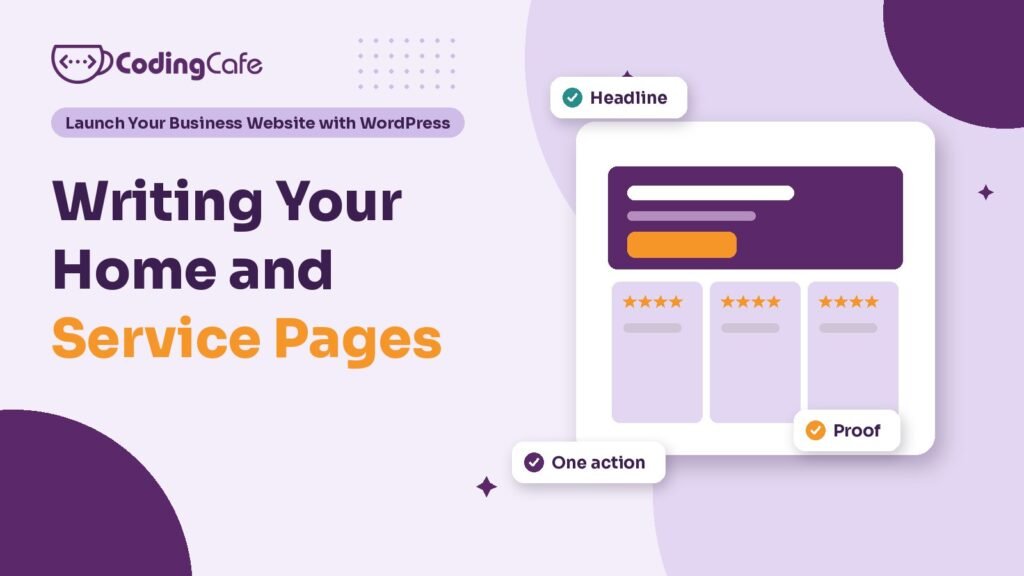
The top of your home page should say what you do, who it is for and where, with one clear button. Below it, link each service, show real proof and answer common questions. Each service page needs what it is, who it suits, what is included, a price or range, proof and the next step.
Key takeaways
- The first screen of the home page must say what you do, for whom and where.
- Below the headline: services, real proof, how it works, common questions and the main action again.
- Give each service its own page with what it is, who it suits, what is included, price and proof.
- City pages need genuinely local content; copies with the city swapped are doorway spam.
- Write as you speak to customers, and cut claims you cannot prove on the page.
Most small business home pages open with the same line. “Welcome to our website.” Or worse, “Your trusted partner for all your needs.” A visitor reads it, learns nothing, and scrolls looking for a reason to stay. Many do not find one.
Words do more work on a website than design does. A plain page with clear words will usually bring more enquiries than a beautiful one that says nothing. This lesson covers what to write on your home page and service pages, in what order, and how to handle city pages without falling into the spam trap.
What Should the Top of Your Home Page Say?
The first screen of your home page, before anyone scrolls, has to answer three questions. What do you do? Who is it for? Where? If a stranger can answer all three in five seconds, the headline works.
Take a real estate agency in Mohali that handles residential sales and rentals in Mohali, Kharar and New Chandigarh. A headline that does the job might look like this:
Headline: Flats and plots in Mohali, Kharar and New Chandigarh, with verified papers — Line below: Buy, sell or rent with an agent who checks title documents before you visit — Button: See listings on WhatsApp
Notice what is missing. No “welcome”, no “leading”, no “one-stop solution”. Every word either tells the buyer something or moves them to act. The supporting line names a real worry, unclear property papers, and answers it. The button matches how people in this market actually like to start, which is a chat, not a long form.
Your headline is also usually the page’s single H1, which matters for Google. Module 3 comes back to that.
What Goes Below the Headline?
After the first screen, the home page has one job: send each visitor to the right place, building trust as they scroll. A simple order works for almost every small business.
- Services: a short card for each service, each linking to its own page.
- Proof: Google reviews, photos of real work, how long you have been in business, any registrations that matter in your trade.
- How it works: what happens after someone contacts you, in a few plain steps.
- Common questions: the questions your phone staff hear every day, answered briefly.
- The main action again: the same button as the top, near the bottom.
Proof needs to be real. Stock photos of smiling families in front of a house that is not yours do more harm than good, because buyers notice. A slightly blurry phone photo of a flat you actually sold last month is worth more. If you are new and have few reviews, say so honestly and show what you can: your RERA registration, the areas you know, how you check documents.
Real photos beat perfect ones.
How Should a Service Page Be Written?
A service page is where the decision gets made. Someone landing on “Property management in Mohali” from Google already knows roughly what they want. They are checking whether you are the right people and what it will cost.
Give each service its own page, and build each one from the same parts:
Length matters less than people think. A service page needs enough words to answer the real questions, which for most businesses means a few hundred words, not a few thousand. Write until the questions are answered, then stop.
How Do You Write City Pages Without Spamming Google?
Here is a trap almost every local business falls into. The agency wants to appear for “property dealer in Kharar”, “property dealer in Zirakpur” and “property dealer in Panchkula”. So someone makes three pages, copies the text, and swaps the city name. Then another twenty for nearby sectors.
Google calls these doorway pages and treats them as spam under its search policies. At best they get ignored. At worst they drag the rest of the site down.
A city page earns its place only when it says something true and useful about that place that no other page says. For the agency, a genuine Kharar page might cover which sectors and societies it actually deals in, typical property types there, local issues buyers ask about, recent listings in that area, and a review from a Kharar client. That is a different page from the New Chandigarh one, because the market really is different.
A quick test: if you can swap the city name and the page still reads as true, it is not a real city page. Make fewer of them, and make each one count. If you only truly work in one area, one strong page beats ten thin ones.
How Should the Words Sound?
Write the way you would explain your service to a customer sitting across the desk. Short sentences. Your customer’s words, not industry jargon. “You” more often than “we”.
- Swap “we provide quality services” for something specific you actually do.
- Cut words like “best”, “leading” and “world-class” unless you can prove them on the page.
- If your customers search in Hinglish or ask questions in Punjabi, it is fine to use their phrases in headings and FAQs.
- Read each page aloud. Anything you would never say to a customer, delete.
If writing is not your strength, record yourself answering the five questions customers ask most, from the first lesson, and have it typed up. That transcript, tidied, is often better copy than anything a hired writer produces without knowing your business. It also helps whoever builds your site; our WordPress development projects start from exactly this kind of material.
What Comes Next?
Your pages now tell people what you do and ask them to act. The next lesson makes sure that action actually reaches you: contact forms, WhatsApp and call buttons that land in the right inbox or phone, stay free of spam, and get tested before customers find out they are broken.
Check what you learned
3 quick questions. Pick an answer and see why.
What three things should the top of a home page answer?
A visitor decides in seconds whether to stay, and these three answers tell them if they are in the right place.
Why are copied city pages with only the name changed a problem?
City pages must carry real local information. Swapped copies get ignored and can hurt the whole site.
What should a service page include besides a description?
These answer the questions customers would otherwise ring three competitors to ask.
You finished Lesson 3
Up next · Lesson 4 Contact Forms, WhatsApp and Calls That Reach You Read the next lesson Previous: Lesson 2 · Themes and Page Builders: Elementor, Blocks or Custom?
Planning a WordPress website?
We build fast, secure WordPress sites for businesses and look after them after launch. Tell us what the site must do and we will suggest the simplest build that fits.

